
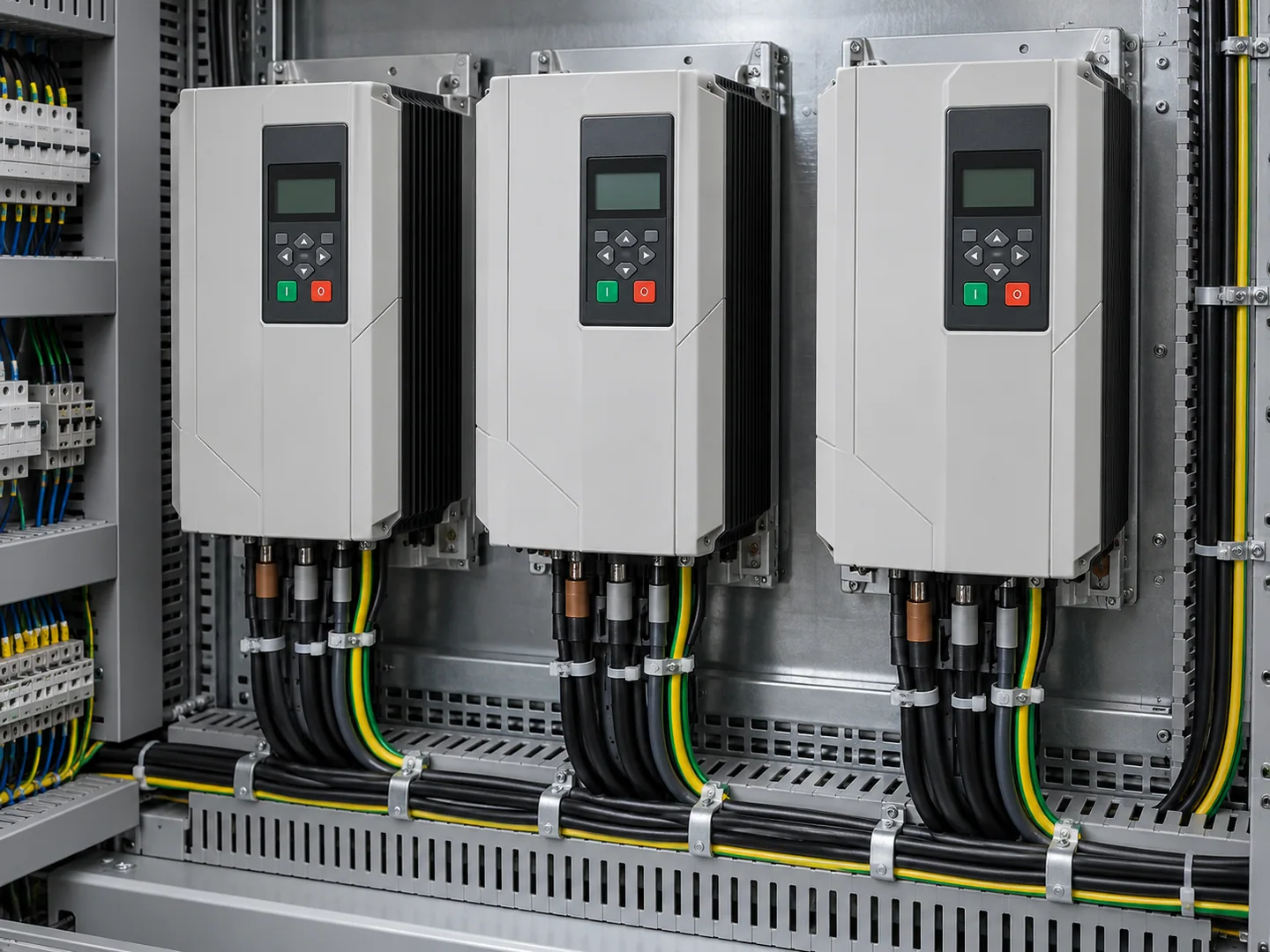
A fault code is the starting point.
A drive alarm identifies a condition the equipment has detected. It does not always establish which component caused it. Capture the exact code, time, operating state and recent changes before asking for a repair or replacement.
Useful context includes whether the event occurs during starting, acceleration, steady running, deceleration or after a long period in service. The drive model and motor nameplate are equally important.
Look at the whole installation.
Assessment may need to include the drive, motor, supply, control commands and load. Cooling and contamination also matter: a cabinet has to remove the heat produced by the installed equipment.
Manufacturer maintenance schedules address model-specific tasks and wear components. Fans, capacitors and other parts should be assessed against the installed product, its operating history and the prescribed service plan.
- Record fault history and the actual process conditions.
- Share motor data, drive model and the authorised parameter set.
- Identify changes to loading, ventilation or control settings.
- Plan any operational tests with the site team.
Replace with a verified specification.
If replacement is recommended, check more than motor power. Supply characteristics, output current, overload duty, enclosure, communications and accessories can affect suitability. Confirm the installation and commissioning scope along with the hardware.
This is an overview for planning and enquiries. Equipment-specific work follows the applicable manufacturer documentation and approved site procedures.